





▼Cat Research That Began with the Belief, “Cats Must Understand Humans, Too!”
▼Why Do We Find Cats “Cute”?
▼Do Cats Ever Mediate Disputes Between Humans?
▼Can Cat-Shaped Robots Recreate a Cat’s “Fluidity”?
Cat Research That Began with the Idea, “Cats Must Understand Humans, Too!” Professor Saito says there were several cats at his parents’ house when he was a child. “My beloved cat Okara (male, lived to be 16), whom I spent 15 years with, was as calm as a Buddhist monk. After he passed away, I took a break for about a year, and now I live with Mekabu (female, 1 year old), who loves to get into mischief.”
Based on those experiences, I’ve come to reflect on the exquisite sense of distance cats maintain with humans, the communication skills humans can learn from them, and—as a dad currently raising a daughter who’s now a year and a half old—the relationship between “parenting” and cats.
Today, I’d like to hear from Professor Saito and discuss topics related to cats and parenting.
First, please tell us a little about yourself, Professor Saito! You conduct research on the relationship between cats and humans, as well as on human child-rearing—what sparked your interest in this field?
When I was thinking about what to focus on, I realized I’d spent a lot of time around cats—at my parents’ house, my aunt’s house, and other familiar environments—so I started conducting experiments with cats. However, there wasn’t much research on cats back then, and after entering graduate school, I actually ended up studying monkeys.
Meanwhile, research on dogs was booming at the time. Study results claiming that “dogs deeply understand humans” were being published one after another. But as a cat person, I couldn’t help but think, “Wait, aren’t cats smart enough too?” (laughs). I decided this was the area I should be researching, so I got started in earnest.
I’m also conducting research on human child-rearing. Actually, I used to really struggle with human babies. After I had my own child, I started to find them cute, but the question, “Cats are so cute—why can’t I find human babies just as cute?” was what prompted me to start researching this topic.
*Comparative Cognitive Science: A field of study that analyzes and compares the intelligence and minds of various animal species to elucidate how “cognitive functions”—including those of humans—have evolved.
In recent years, experiments have been conducted through home visits or at cat cafes, but many cats get upset just by the presence of strangers, so it’s difficult to collect samples. I think those are the challenges involved in cat research.
Why Do We Find Cats “Cute”? Mr. Otaki was deeply influenced by his family’s cat (Aya, who lived to be 18 years old), with whom he grew up from childhood. Moving forward, drawing on his own experiences, he will focus on themes related to “cats and child-rearing” and “pet loss,” working on solution development and research that combines his areas of expertise—technology and creativity.
For example, research comparing the Libyan wildcat—considered the ancestor of cats—with modern domestic cats suggests that the meows of domestic cats are perceived as more pleasant to humans. It’s thought that, in the process of coexisting with humans, individuals that meowed in a cuter way were more likely to be fed and thus had a better chance of survival, leading them to evolve these characteristics.
Speaking of similarities between babies and cats, there’s a facial feature known as the “baby schema.” Characteristics like large eyes, a small mouth and nose, and a large head tend to give many people the impression that something is “cute.” These facial features may also be one reason why humans find cats cute.
Do cats ever mediate disputes between people? A corner of the bookshelf in Professor Saito’s lab is packed with books related to cat research.
When you think about it that way, isn’t it entirely possible that cats sense human emotions in some way and adjust their behavior accordingly? As a result, cats might be acting as a “cushion” that helps smooth out interpersonal relationships.
Can a cat-shaped robot replicate a cat’s “fluidity”?
In the future, technologies that can detect early signs of illness or monitor a cat’s emotional state via camera while the owner is away might become a reality.
If we can tell when a cat is “hungry,” we could remotely feed it at the right time and in the right amount. If we can tell it’s bored, we could activate a pet toy that provides fun exercise right in the house. Being able to accurately understand a cat’s emotions will likely lead to the development of solutions tailored to those emotions, so it’s something to look forward to.
The key question is whether AI can actually learn and reproduce those exquisite behaviors—like sensing something and distracting us, or making us instinctively think, “That’s cute”—that cats exhibit. Professor, are there any specific elements you think would make a robot seem more cat-like?
Personally, I think it would be particularly interesting if we could incorporate the characteristic movements of a cat’s “tail.” While there are robots that focus specifically on tails, I get the impression there aren’t many examples that delve deeply into tail movements in a way that’s integrated with overall motion and emotions. Even with the cat robot I mentioned earlier that ignores humans, if only its tail were reacting—say, by twitching rapidly when it’s annoyed—it might suggest, “Is it just irritated right now and not responding?” This would help deepen the sense of communication without creating a sense of disconnection.
As you mentioned at the beginning, it’s precisely because there’s still so much about cats that remains unexplained that they’re worth exploring, and I’ve been reminded once again that this is a field where our expertise in creativity and technology complement each other well. Building on our discussion with the professor, I hope we can use this to develop even more innovative initiatives for NekoNabo.

Illustration: Momoko Negishi (Neko Lab Tokyo)
Inquiries: neko-lab-tokyo@dentsu.co.jp
The information published at this time is as follows.
Was this article helpful?
 32Author
 Saito Chiko
Sophia University
Faculty of Human Sciences, Department of Psychology
Associate Professor
Completed doctoral program at the University of Tokyo Graduate School of Arts and Sciences. Doctor of Philosophy (Ph.D.).After serving as Assistant Professor and Lecturer at the Graduate School of Arts and Sciences, University of Tokyo, and Lecturer at the Faculty of Education, Musashino University, assumed current position in 2018. Specializes in comparative cognitive science, developmental psychology, and evolutionary psychology. Major publications include “Basic Developmental Psychology” (co-edited, University of Tokyo Press, 2018) and “There’s No One Right Answer: Animals Raising Their Young” (co-edited, University of Tokyo Press, 2019).
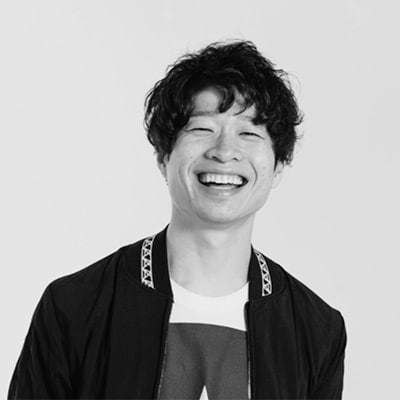 Atsushi Otaki
Dentsu Inc.
zero/Dentsu Lab Tokyo
Creative Director / Creative Technologist
After pursuing AI research and planetary rover development through graduate school, joined Dentsu Inc. Gained experience in promotion and PR before passing the Creative Exam and assuming current role. Creative Director since 2023. Leverages real-world experiences combined with technology to deliver solutions for corporate and national projects, as well as R&D initiatives. Key projects include integrated communications (CM to digital) for PARCO Grand Bazaar 2024-2025, interactive window displays for SEIKO HOUSE GINZA, overall production for the send-off events for the Japanese Olympic teams at Beijing 2022 and Tokyo 2020, establishment of the JOC Japan Olympic Museum, and production of technological content for the Tokyo 2020 Paralympic Opening Ceremony and Closing Ceremony technological content, the remote communication product “Kibai no Hana” (Flowers of Presence), and the planning and development of the casual sport “Tonton Voice Sumo”. He has received over 100 awards domestically and internationally, including the world’s three major advertising awards: Cannes Lions, The One Show, and Clio Awards, as well as the ACC Awards and the Japan Media Arts Festival. He is the Chairperson of the Dentsu Inc. Internship “School of Technology and Ideas” (2024-2026). Author of “Creator Job Hunting 2: The Digital Creative Edition.” Director, World Yuru Sports Association / Sports Creator